1. Decoding Human–Honeyguide Communication
What are the critical features and minimal cues in human and honeyguide vocalizations that enable inter-species cooperation?
- In collaboration with Professor Claire Spottiswoode FRS and her team at University of Cape Town, we aim to contribute to the ongoing study of the rare partnership between humans and greater honeyguide and decipher their communication mechanism.
- We are using both mathematical and AI-based, data-driven methods to model this unique two-way communication between our own species and a free-living wild animal.
2. Measurement, Interpretation, and Learning in a Coupled Human–Infrastructure System
How should sustainability experiments be designed in residential settings where people live, learn, and adapt in response to what is measured?
- Measuring Mather project is an effort to instrument, model, and interpret energy use, environmental conditions, and food waste in a large undergraduate residential house, turning it into a living laboratory.
- This project integrates continuous environmental sensing, analysis of power and steam consumption, machine-vision-based estimation of food waste, physical prototyping of ventilation and cooling mechanisms, and sustained community engagement.
3. Adaptability of Honeycomb Structure
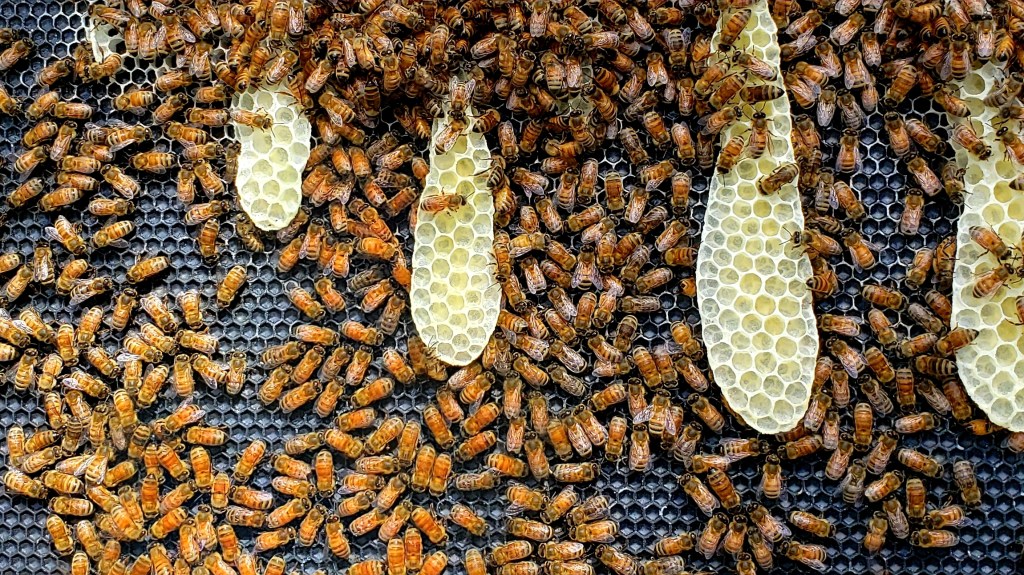
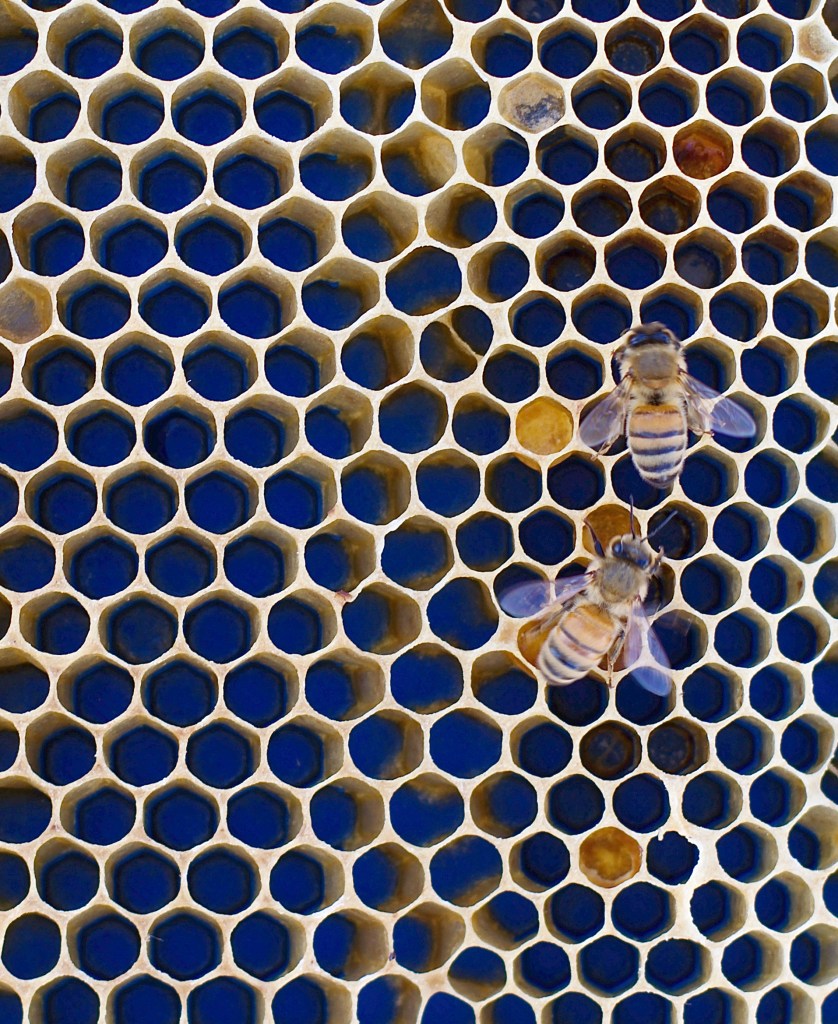
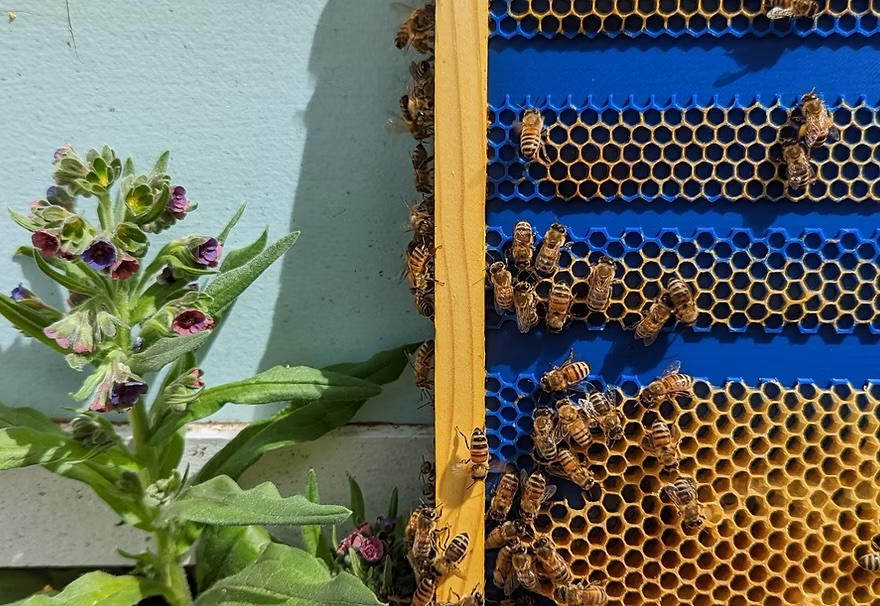
What kinds of patterns arise as honeybees collectively build and adapt their comb structure on surfaces with various geometric frustrations (i.e., environmental noise)?
- Collecting data using carefully designed 3D-printed panels to test the response of the bees under various initial conditions.
- Using X-ray Microscopy to identify building modes and patterns in the honeycomb structure built on our experimental frames, under various geometric frustrations.
- Using a combination of math and physics to model the detected patterns observed in our experiments.

4. Collective Resource Distribution in Honeybees
How do honeybees communicate to locate fed individuals during trophallaxis exchanges?
- Collecting in-lab video recordings with two groups of fed and deprived honeybees exchanging food.
- Using mathematical tools such as topological data analysis to characterize the process of food distribution and detect behavioral regime shifts.
- Developing data-driven agent-based models of the food distribution process to understand the local rules and mechanisms hat govern the resource distribution process.


 ggfard.com